Meditation and water are wedded forever.
Moby-Dick, Chapter 1
The oceans cover two thirds of our planet’s surface and are responsible for over half of our oxygen and one
fifth of our nutrition. They are in trouble.
And when the oceans are in trouble, so are we.
“Oceans,” Anthropocene Institute
Herman Melville (1819-1891) closely observed oceanic life and death from the decks of ships and found a “nervous lofty” language with which to engage its beauties and terrors. He has inspired many a reader to go to sea, imaginatively or otherwise. But how does one think about Melville’s Ocean in the 21st century? What has happened to the romance of the sea—to his “renegades and castaways,” the Handsome Sailor, or Pacific, Indigenous, African, or Lascar mariner? What has become of the “watery part of the world” that both separates and connects the continents?
In the Anthropocene, one might say that the romantic ship-narrative has sailed, replaced with a clearer understanding of the human impact on marine climate and environmental stability and the human pressure on beings who live in or depend on the sea. Within a variety of contexts, then—ecocritical, aesthetic, ethical, sociopolitical, posthuman—how do we read and return to Melville’s oceanic texts and themes?
The Fourteenth International Melville Society Conference, Oceanic Melville, will investigate these questions and others within a broad understanding of the term “oceanic.”
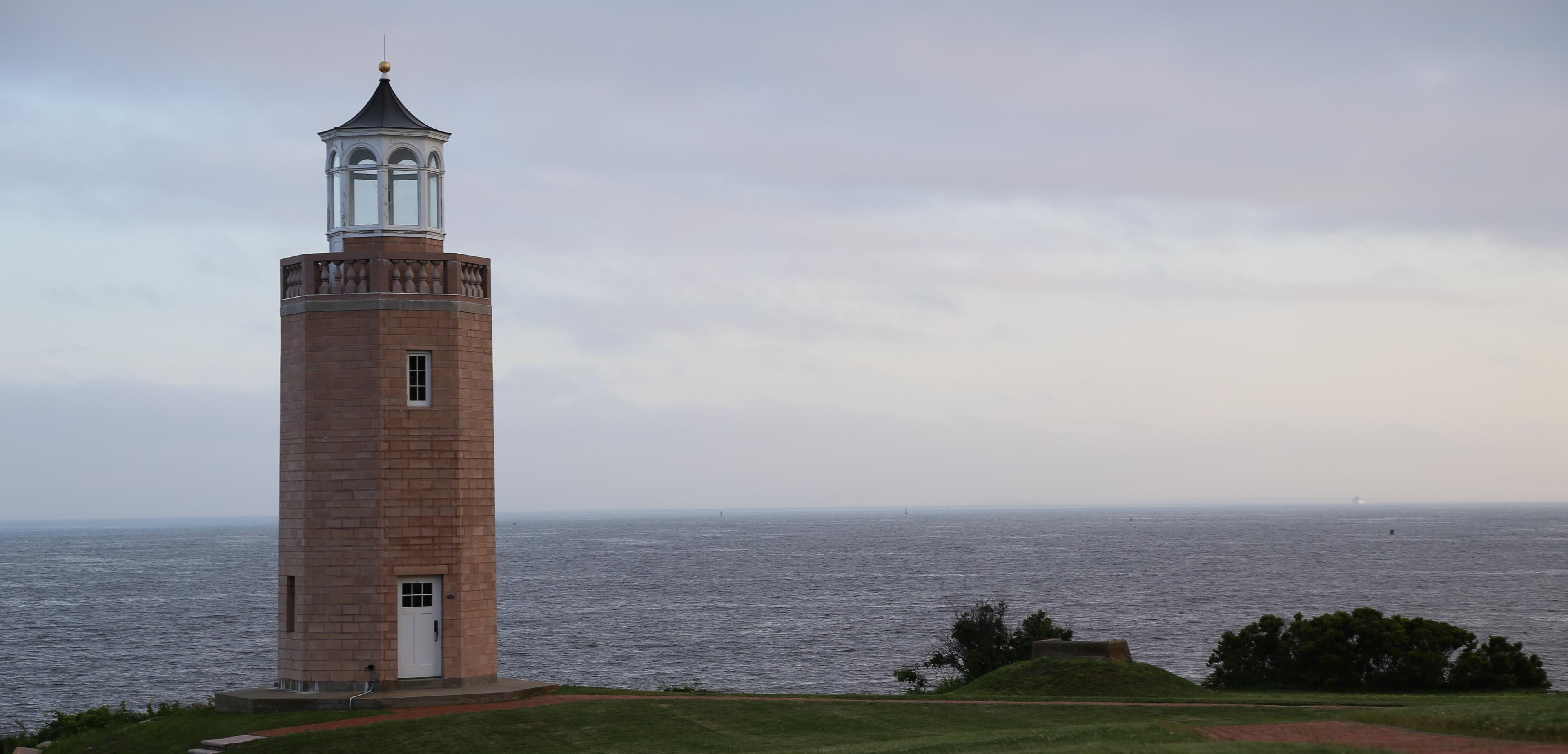
The Oceanic Melville conference will be held on the maritime campus of the University of Connecticut at Avery Point in Groton, Connecticut, June 16-19, 2025.
The first International Melville Society Conference was held in Volos, Greece, in 1997. Since then, there have been twelve more, held in Mystic, CT (1999), Long Island, NY (2001), Lahaina, Maui (2003), New Bedford, MA (2005), Szczecin, Poland (2007), Jerusalem (2009), Rome, Italy (2011), Washington, DC (2013), Tokyo, Japan (2015), London, England (2017), New York City (2019), and Paris, France (2022). Oceanic Melville will be the fourteenth.
Conference Organizing Committee
Mary K. Bercaw Edwards, University of Connecticut
Wyn Kelley, Massachusetts Institute of Technology
Tony McGowan, United States Military Academy


1841 Whaleship Charles W. Morgan at Mystic Seaport Museum
Credit: Mystic Seaport Museum, via Wikimedia Commons
Whaleboat
Credit: Stan Shebs, CC BY-SA 3.0, https://commons.wikimedia.org/w/index.php?curid=115479
“The Boats of the Acushnet Chasing Whales.” Watercolor by Henry M. Johnson from his manuscript log of the Acushnet, 1845-47. [Note: Melville sailed on the Whaleship Acushnet.]
Credit: Acushnet (Whaler) logbook (detail), 1845–1847. Peabody Essex Museum, Gift of Augustus P. Loring. Log 1234. Courtesy of Peabody Essex Museum. Photography by Walter Silver.
Countdown to the Event
- Days0
- Hours0
- Minutes0
- Seconds0